What I Took Away from the 2026 Seedtag Innovation Summit
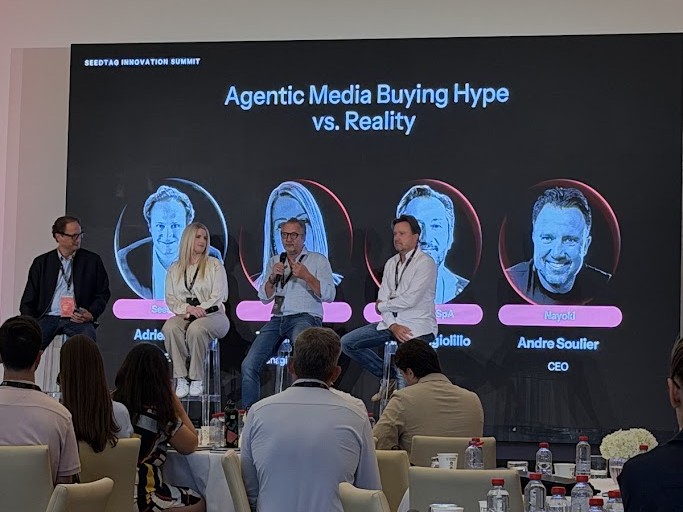
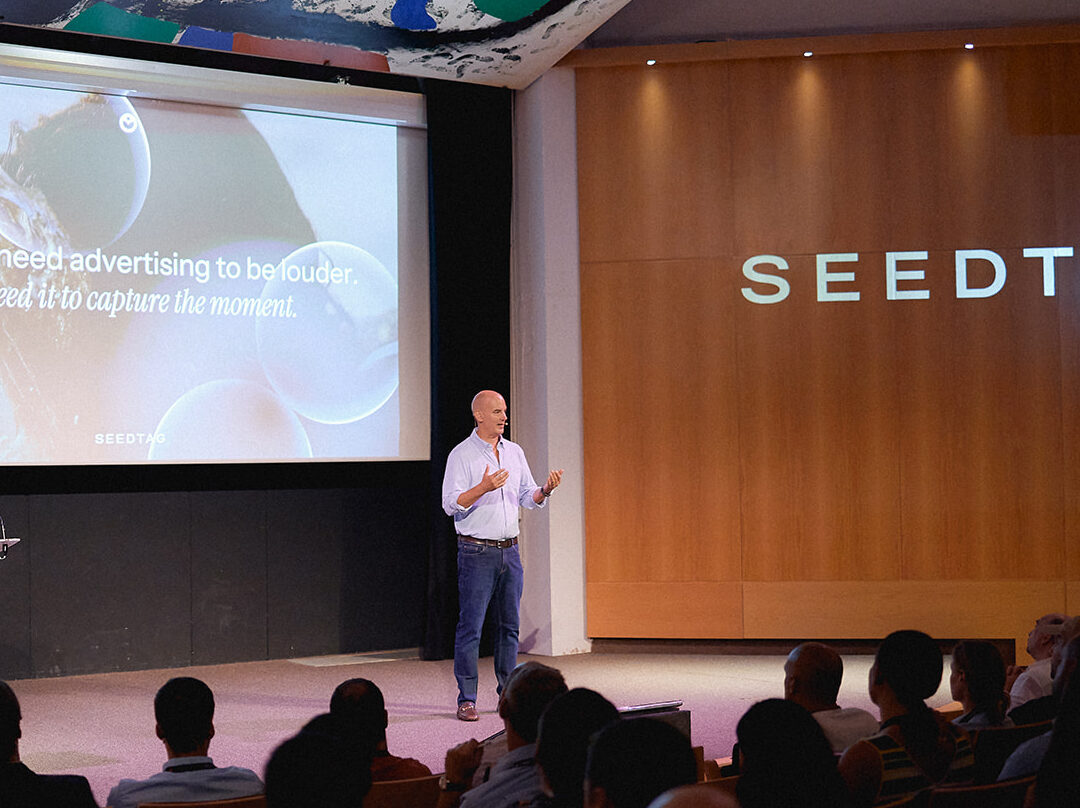
When I was invited to the Seedtag Innovation Summit in Barcelona, my immediate response was “YES… but are you sure you meant to invite me?” Representing a smaller Boston agency, in comparison to some of the industry’s biggest international names from both the supply and demand side, felt somewhat intimidating at first. However, it turned out to be a valuable reminder that a good idea does not need the biggest name in the room behind it.
The unforgettable panels and conversations covered the future of advertising from many fascinating and provocative angles, but these themes stayed with me: the power of context in reaching consumers, the now of CTV, and the responsibility that comes with using AI.
The Right Person Is Only Part of the Equation
For years, advertisers have focused on who they want to reach. We build audiences around demographics, interests, and past behavior, then look for ways to find those people across a multitude of channels and platforms. Don’t get me wrong, that still matters. But the same person may be more or less receptive to an ad depending on what they’re watching or reading, the device they’re using, or what they’re doing at that moment.
That is where context adds value. It helps us ask a better question: When will this message feel relevant to the consumer?
For clients, the approach is practical. We start with the audience and the business goal. Then we identify the content and situations where that audience is likely to be receptive, choose channels that can reach those moments, and adapt the creative to fit. From there, we measure which combinations drive the outcomes that matter and adjust the plan.
Consider a food brand. Reaching someone who fits its target audience is useful but doesn’t capture the entire picture. Reaching a busy person or parent while they are exploring last-minute dinner ideas, with a message that speaks to an easy or quick meal, gives the ad a clearer reason to be there. Context helps connect the audience, the moment, and the message without depending solely on personal identifiers.
Premium Content Deserves a Closer Look
The summit’s CTV discussions reinforced a point I have made before about buying within walled gardens: a familiar publisher name does not, on its own, tell us whether an ad will reach the right customer in the right setting.
As a trained linear buyer who specialized in the Prime daypart (a million years ago) before turning into a CTV buyer, one of my biggest takeaways was this: premium publishers do not automatically deliver the most valuable audience for every brand. Compelling content and meaningful viewer experiences exist across a wider range of platforms than the names that tend to dominate the media. We should evaluate the content, the audience and the environment together instead of treating a platform’s reputation as a stand-in for performance.
A strong CTV strategy brings high-quality content together with sound audience insights and a clear measurement plan. The question for clients should be less “Are we on the biggest platform?” and more “Is this the right viewing experience for the people we need to reach?”
AI Makes Judgment More Valuable
AI was one of the summit’s most debated topics. Its potential is clear: it can help advertisers find patterns across signals, predict which moments may be most effective, and handle parts of campaign activation more efficiently. That could give agency teams more time to focus on strategy, creative decisions, and business results.
But all of these positives raise difficult questions. Who owns the data used to train and operate these systems? How can buyers understand automated decisions and spot bias? Who is accountable if an AI agent makes a costly mistake? And how much budget should it be allowed to move without a person approving the decision?
The discussions made clear that the industry needs shared standards for transparency, governance, and accountability as AI becomes more deeply embedded in media buying. Agencies also need to keep developing people who understand how campaigns work in practice, so they can question an automated recommendation rather than simply accept it.
For me, the only path forward is to use AI to sharpen our thinking and improve execution while keeping human judgment firmly connected to the decisions that affect clients’ businesses.
What This Means for My Clients…
After taking in three incredible days of conversations in and out of the presentations and panels, I left humbled and excited for the opportunity ahead to turn words into action. The opportunity here is to make targeting more relevant: reach the audience we care about in moments when our message makes sense, with creative that fits the experience. Context helps us choose those moments. Premium Names do not equal Premium Customers. Lastly, AI can help us recognize and respond to patterns at scale, but there needs to be a unified governance established that is recognized and followed at scale. The best media plans will bring those pieces together, then prove their value through business outcomes.
Thank you to Seedtag for a truly amazing Barcelona experience.
Takeaways From the First Retail & Commerce Media Upfront
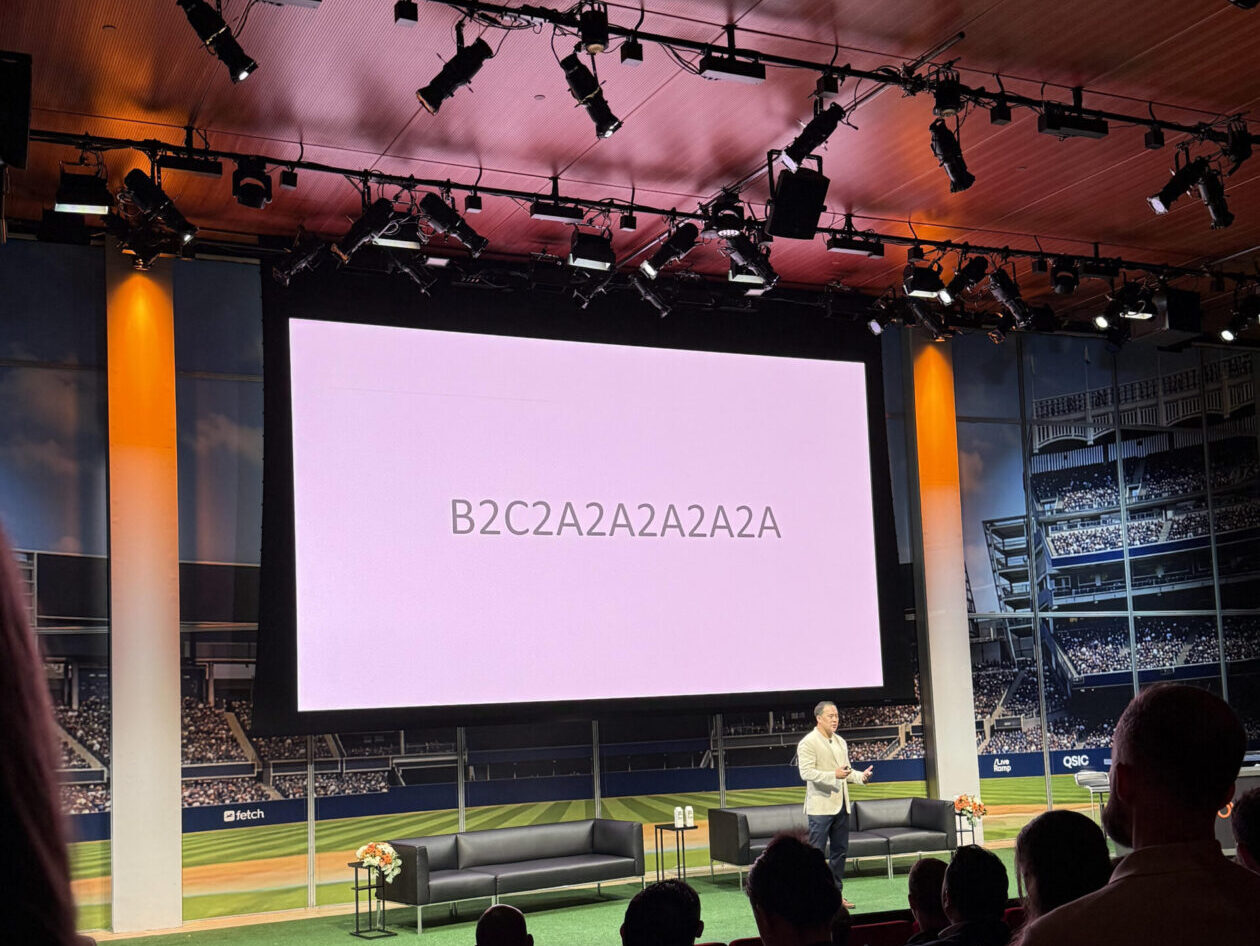
Last week, I spent the day at SHOWCASE 2026 in New York, Ascendant Network’s inaugural event and the first Retail + Commerce Media Upfront. And it certainly lived up to the ambition: 200+ curated buyers in the room, representing partners that collectively handle $12B in annual ad sales and sit on top of $1T in retail sales. If you work anywhere near retail or commerce media, it’s clear this is quickly evolving into a category with its own upfront season, much like TV and streaming before it.
The format felt familiar: back-to-back sessions from retail and commerce media networks showcasing their roadmaps, inventory, and value propositions. But the day opened with a keynote that asked a more fundamental question: Who is the customer?
Jeremiah Owyang of Blitzscaling Ventures opened with “When AI Agents Become the Customer,” offering a compelling perspective on how AI could reshape the shopping journey.
The idea: purchase decisions could increasingly be made not by a person browsing and comparing products, but by an AI agent acting on the consumer’s behalf, potentially interacting with other agents along the way. That has meaningful implications for retail media, an industry largely built around influencing human shoppers.
Today’s playbook relies on creative, product pages, sponsored placements, and promotions designed to capture attention. An AI agent, however, cares less about the ad itself and more about structured data, price, availability, product attributes, and reviews.
That raises several questions:
How do ads evolve? While persuasive media will remain relevant for human-led discovery, machine-facing “ads” could transform into functional decision signals such as price and incentives.
What happens to the funnel? The path from discovery to purchase could become increasingly automated, shifting the goal from simply driving a click to ensuring your product is the one an agent recommends.
How much will retailers know about the consumer? As agents transact on behalf of shoppers, traditional signals of identity and intent could become harder to capture.
None of this suggests the current retail media model is going away. First-party purchase data and proximity to transactions remain incredibly valuable. But it does suggest that the definition of the “shopper” may be evolving.
Beyond the AI conversation, SHOWCASE was a strong signal that retail and commerce media have officially entered their upfront era. The scale, investment, expanding inventory, and sophistication of the networks in the room made clear that this is becoming a core part of the broader media ecosystem.
The more interesting question is what comes next.
Retail media is evolving not only in where brands can reach consumers, but potentially in how purchase decisions are made. As networks build their future roadmaps, marketers will need to consider how their brands show up in an increasingly automated path to purchase.
B2C2A2A may be a clunky acronym, but the shift it could represent is one worth watching.
How YouTube Is Reshaping the Media Landscape
I had the opportunity to join Pixability and Google in Boston to speak on a panel about the evolving role of YouTube in today’s media landscape. I was especially excited to participate alongside our client partner, Susie Siegel, Director of Integrated Marketing at Gorton’s Seafood, bringing both the agency and brand perspectives to the discussion.
The panel explored how marketers are navigating YouTube’s growing role across the media mix – from CTV and Shorts to in-stream video, creative and measurement. The conversation reinforced how YouTube is evolving within an increasingly fragmented media landscape and why marketers need to think more holistically about the role it can play across the consumer journey.
For years, YouTube has often been viewed as an upper-funnel, video-first channel – a powerful way to build awareness and reach audiences at scale. But as CTV, social video, retail media, and commerce continue to converge, that role is becoming much more nuanced.
Here are three themes I took away from the conversation.
YouTube Is Becoming Both a Brand and Performance Channel
Historically, YouTube has been thought of primarily as an upper-funnel investment, and it remains an important channel for building awareness, reaching new audiences, and creating demand. However, we’re now seeing more opportunities for YouTube to play a role further down the funnel as well.
The continued growth of retail media is creating new opportunities to connect upper- and lower-funnel marketing. As retailers expand their partnerships with major media platforms, marketers can increasingly combine YouTube’s scale and storytelling capabilities with their first-party data and closed-loop measurement.
These partnerships are creating new opportunities to evolve how we target, measure, and activate YouTube – going beyond simply driving reach to better connect media exposure to the right consumers, environments, and, ultimately, business outcomes.
That doesn’t mean every YouTube dollar should suddenly be evaluated like a lower-funnel investment. Brand building still matters. But the lines between awareness, consideration, and conversion are becoming increasingly blurred. And that’s a good thing.
Format Shouldn’t Dictate Strategy
Another topic we discussed was how we think about budgeting across YouTube formats – CTV, in-stream, and Shorts. Our approach is to think about YouTube as a unified investment, rather than putting each format into a separate budget bucket.
Part of the reason is that the way consumers use YouTube is changing. TV screens have now become YouTube’s most-watched screen, and consumers aren’t just watching long-form content on their TVs – they’re watching in-stream video and Shorts there, too.
That challenges traditional ways of thinking about video planning. We can no longer assume CTV means long-form content on a television, while Shorts means vertical video on a mobile device. The same formats can show up across screens and throughout different moments of the consumer journey.
That’s why we prefer to manage YouTube as a single investment rather than pulling from separate buckets – for example, treating CTV as a TV expense and Shorts as a social expense. Separating formats creates artificial constraints around where dollars can go, when in reality these formats can work together toward the same business objective.
Keeping the investment unified allows us to shift dollars based on where we’re seeing the strongest opportunity, rather than being limited by how a format has traditionally been categorized.
Media and Creative Need to Be In the Room Together Earlier
Perhaps the biggest opportunity – and one that extends well beyond YouTube – is bringing media and creative teams together earlier in the process.
The way consumers experience content is changing rapidly, and creative needs to be built with those environments in mind from the start. If a campaign will run across CTV, in-stream, Shorts and social, those environments should be part of the creative conversation early on.
That means asking questions like:
How will the idea translate to vertical?
Do we have a Shorts-friendly version?
Can the creative work both with sound and without?
How does the story change when someone is watching on a TV versus scrolling on their phone?
The goal isn’t to create completely different campaigns for every platform. It’s about developing a flexible creative system that allows a strong idea to work across the environments where consumers are actually spending their time.
The common thread across all three conversations is that the media landscape is becoming less about individual channels and more about how those channels work together – and YouTube is a great example of that evolution.
Instead of asking, “Is YouTube a brand channel or a performance channel?” we should be asking: What role can YouTube play across the consumer journey, and how can we build the right combination of audience, format, creative and measurement to make it work?
The answer will look different for every brand. But one thing is clear: YouTube’s role in the media mix is becoming much bigger than simply delivering video views. And I’m excited to see where it goes next.
Advertising at the Frequency of the Soul
At Connelly Partners, we have long held a belief that guides every brief, campaign, and conversation with a client: to move people’s feet, we must first move their souls.
For decades, this felt like philosophy. Increasingly, it looks like science.
A growing body of research — from neuroscience to quantum physics to consciousness theory — suggests that human decision-making is not a rational process colored by emotion. It is, at its core, a feeling process that gets rationalized after the fact. And the most provocative frontier of that research raises an even bolder possibility: that what we call the “soul” — the place in a person where meaning lives, where a message either lands or doesn’t — may be less metaphorical than we imagined. It may be a frequency. And advertising, at its best, may be an act of tuning.
Part I: The Science of Feeling First
The neuroscientist Antonio Damasio spent decades studying patients with damage to the ventromedial prefrontal cortex — the region that processes emotional signals in decision-making. What he found upended the Enlightenment’s central assumption about human rationality. These patients were intelligent and articulate — but they could not make decisions. Without the emotional signal, the rational mind had no mechanism for choosing.
His landmark finding: emotions are not noise. They are the prerequisite for decisions. Before logic weighs in, the body registers a feeling — a somatic marker — that pre-screens options, elevating some and eliminating others. Damasio called it an “internal alarm.” Not irrationality. The system worked exactly as designed.
The advertising research confirms what Damasio’s neuroscience predicts. A Nielsen analysis of 100 campaigns across 25 brands found that ads scoring above average on neuroscience-based emotional measures generated a 23% lift in sales. The Institute of Practitioners in Advertising’s landmark analysis of over 1,400 IPA campaigns found that purely emotional campaigns produced a 31% profitability increase versus 16% for purely rational ones — nearly twice the ROI. A 2025 study conducted by Columbia University neuroscientist Professor Moran Cerf for Seedtag found that ads aligned to the emotional tone of their context delivered 3.5 times higher neural engagement and a 26% lift in positive, action-driving emotional response.
The soul, in other words, is not a soft target. It is the most efficient path to the decision.
Part II: The Brain as Hologram
Here is where the science gets stranger — and more interesting.
Stanford neuroscientist Karl Pribram spent decades puzzling over a problem no conventional brain model could solve: why does memory survive injury? When large portions of brain tissue were removed in animal experiments, subjects still retained learned memories. The information wasn’t stored in any single location — it seemed distributed everywhere. No matter where you cut, the whole remained.
This is precisely how a hologram works. In a holographic plate, every fragment contains the interference pattern for the entire image. Cut the plate in half and you get the whole picture, slightly less sharp — not half a picture. Pribram proposed that the brain encodes memory the same way: as distributed wave-frequency patterns across neural fields. His decades of laboratory data convinced him that “whatever comes into the brain becomes distributed” — stored in a frequency domain describable by the same mathematics used to create holograms.
His model went further: the brain doesn’t record the world like a camera. It performs a frequency transformation — converting waveform inputs from the senses into the coherent objects and experiences we perceive as reality. Perception isn’t passive recording. It is an active translation between frequency and form.
Part III: The Universe as Hologram
Physicist David Bohm arrived at a compatible theory from the opposite direction — from quantum mechanics rather than neuroscience. Bohm observed that quantum particles that had once interacted seemed to influence each other instantaneously across any distance, as though space posed no barrier at all. He proposed that the separate, distinct world we perceive — what he called the “explicate order” — is a surface unfolding from a deeper, enfolded reality he called the “implicate order”.
The best analogy for the implicate order, Bohm argued, was a hologram: a distributed whole from which any fragment can reconstruct the complete image. Consciousness, he believed, operates between the two orders — between the visible world of space and time, and the deeper field where “everything is internally related to everything”.
In his 1991 book, The Holographic Universe, Michael Talbot synthesized Bohm and Pribram’s parallel frameworks into a single proposition: that the universe itself functions holographically, and that the human brain — also holographic in its processing — is a smaller piece of that larger whole. Each mind, in this view, contains a perspective on a universal pattern of information that underlies physical reality.
Part IV: What This Means for Advertising
Most advertising models assume a world of bounded, separate individuals — each one a container to be filled with messages, persuaded through argument, moved through incentive. The brief is to reach them. The goal is to change what they think.
But if the holographic model is even partially correct — and it remains speculative, a hypothesis rather than settled science — then a different picture of the consumer emerges. Not a container, but a receiver. Not a rational agent processing inputs, but a frequency-sensitive consciousness, perpetually translating between the world of surface signals and a deeper order of meaning from which those signals arise.
In this picture, authentic stories move people and manufactured ones don’t — not just psychologically but perhaps structurally. Authentic communication is coherent: the surface signal aligns with the deeper pattern of meaning it represents. Manufactured emotion is incoherent: the signal and its source are misaligned. The receiver detects that dissonance, even if the rational mind cannot name it. This would explain Damasio’s somatic markers from a new angle. The gut feeling that a brand rings hollow — that the ad feels false — may be the brain’s holographic processing detecting interference between the signal received and the deeper pattern it purports to represent.
In physics, resonance occurs when an object vibrates at the same natural frequency as another, amplifying both. In marketing, the same principle applies: when a brand’s message operates at the same emotional frequency as its audience, the impact multiplies. This may not be a metaphor borrowed from physics. It may be the same phenomenon, at a different scale.
The Speculative Thesis
Connelly Partners’ belief — to move people’s feet, we must first move their souls — has always been intuited from practice: from the campaigns that worked and the ones that didn’t, from the creative that moved people and the creative that didn’t.
The emerging science of consciousness offers a compelling framework for why this is true:
If the holographic model of consciousness is correct, then human beings are not passive recipients of information — they are active participants in a universe where meaning is distributed, non-local, and present at a level deeper than the visible world. A brand communication does not create meaning. It either resonates with pre-existing patterns of felt human experience, or it doesn’t. Moving the soul is not a poetic device for emotional engagement. It is a description of what actually happens when a frequency-coherent communication reaches a frequency-sensitive receiver.
This is why authenticity cannot be faked — not just as brand strategy, but perhaps as a matter of physics. Manufactured signals are incoherent. Incoherent signals don’t resonate at the level that matters. They may register at the surface — but they do not move the deeper pattern. They do not move the soul. And without the soul, the feet don’t follow.
A Note on Speculation
This is deliberately framed as a hypothesis, not a proof. The holographic universe framework is serious science, advanced by physicists and neuroscientists of the highest standing — Bohm at Princeton and Berkeley, Pribram at Stanford. But it remains contested and unverified as a complete theory of reality.
What is not speculative is the neuroscience of emotional decision-making. Damasio’s somatic marker hypothesis is among the most well-evidenced theories in cognitive science. The advertising effectiveness research is robust across hundreds of peer-reviewed studies and industry analyses.
The leap — from “emotions move decisions” to “consciousness may be holographic and advertising may be an act of frequency resonance” — is offered in the spirit of genuine intellectual curiosity. Connelly Partners has always believed the best advertising asks the biggest questions. This is one of the biggest: What, exactly, is a soul? And what does it mean to move one?
We don’t have the complete answer. But we think the question is worth asking out loud.
What the OOH Insider Summit Revealed About the Future of Out-Of-Home
Abby Sullivan, Associate Media Director
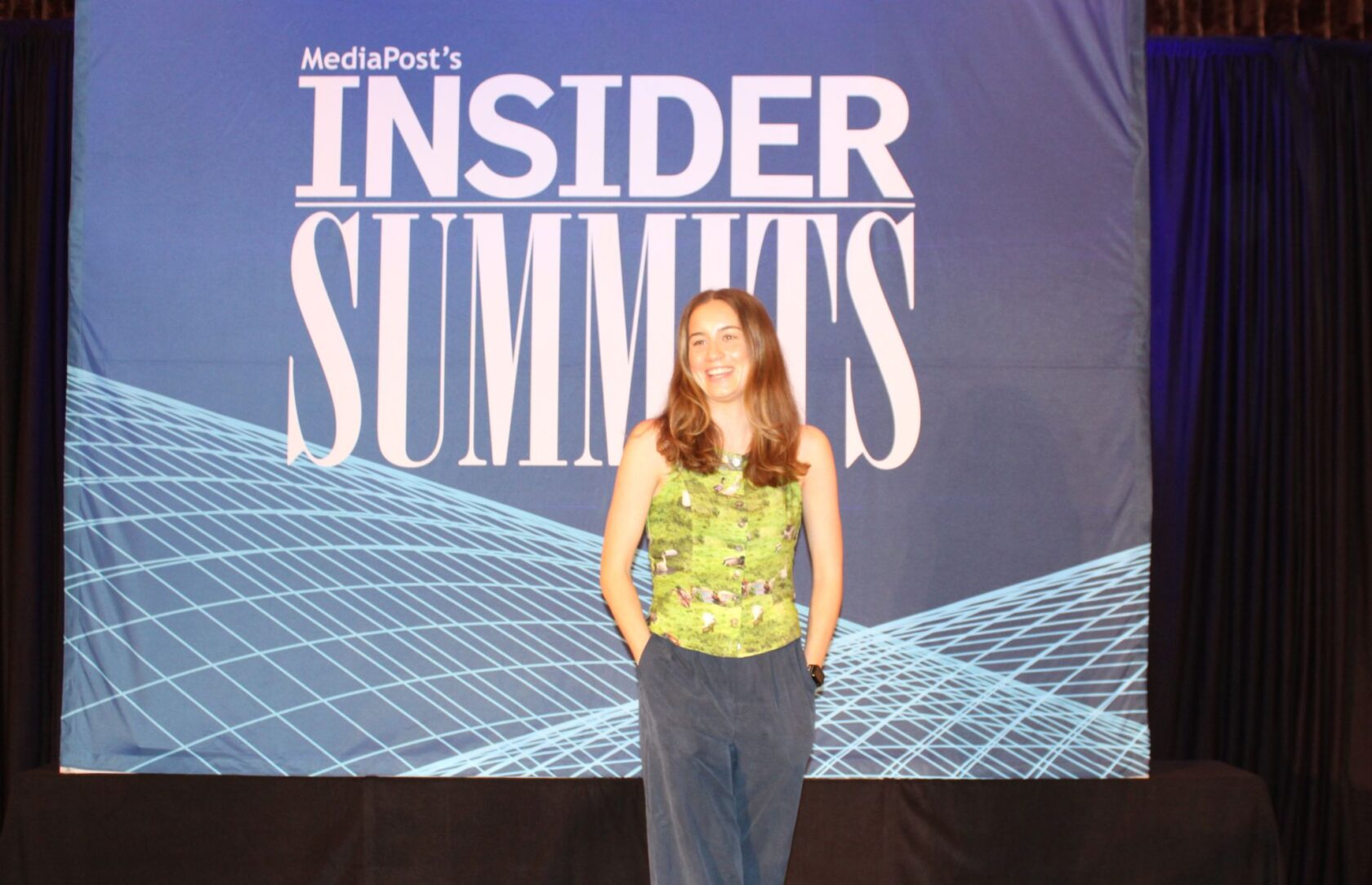
At the recent MediaPost OOH Insider Summit in Nashville, the conversation wasn’t just about billboards; it was about whether out-of-home advertising is ready to earn its seat at the performance table. One theme surfaced again and again: OOH has the reach and the creative power, but it’s been playing catch-up on measurement for years, and in a media landscape where every dollar needs to justify itself, that gap has real consequences.
The Industry’s Honest Reckoning
Dentsu set the tone early with a line that stuck: OOH has been bringing a showreel to a data fight. Out-of-home now represents just 2.3% of total advertising spend, down from 4%, and continues to lose ground as other channels have built closed-loop measurement, attribution models, and real-time optimization. The medium isn’t broken as attention is actually growing. But the inability to consistently prove downstream impact has made OOH an easy line item to cut when budgets tighten.
What the Data Actually Shows
MFour Data Research brought six years of benchmark data (145,000+ survey responses across hundreds of campaigns) and the findings were both validating and uncomfortable. Creative Recall has climbed from 38% to 44%, and Ad Recall has nearly doubled from 18% to 29%. But lower-funnel metrics like Brand Opinion, Consideration, and Purchase Intent have been trending in the opposite direction. Reach is up. Lift is down.
The Human Edge
A session on OOH in 2031 offered a useful reframe for planners: AI will absorb the repetitive, execution-heavy work, but OOH remains uniquely dependent on human judgment. Whether it’s the read on a market, a neighborhood, or a moment, the nuanced instincts that make a placement feel right just aren’t automatable. As hard skills shift to AI, soft skills sharpen.
What We’ve Seen at Connelly Partners
On the final day, I had the opportunity to present our own experience making OOH work under real budget pressure. For the Museum of Fine Arts Boston, a strategy built around physical frequency and emotional connection drove significant increases in ticket sales both in the immediate launch window and year-over-year. The lesson: OOH performs best when treated as an accountable lower-funnel anchor and omnichannel multiplier, not a standalone awareness play.
The Road Ahead
OOH is at an inflection point. The creative case has always been strong. What’s catching up now is the data, and with it, the opportunity to reframe how OOH is planned and measured. Audience precision, category-level thinking, dynamic creative, and incrementality-focused measurement are the levers that will bring the medium back. The planners who build around those principles will be the ones defining what OOH looks like in 2031.
When Smaller Budgets Ask the Biggest Questions
Michelle Capasso, Partner & Chief Media Officer
I recently moderated a roundtable titled “The Role of OOH in Budget-Conscious Media Strategies” at the MediaPost OOH Insider Summit in Nashville. The premise was practical: how do you justify and maximize out-of-home when budgets are tight and every channel is fighting for the same budget?
While the large group started with that thought, where we ended up became something more interesting.
Within the first few minutes, the conversation moved past tactics. Formats, geography, dayparting. We landed pretty quickly on something nobody had explicitly come to discuss – are we at risk of optimizing OOH into irrelevance?
The pressure is understandable. When budgets compress, every channel gets scrutinized. And OOH has always had a measurement problem relative to digital. No click, no cookie, no clean attribution path. So the natural response is to reach for programmatic buying, efficiency metrics, and CPM comparisons that make OOH look defensible in a media plan. My colleague, Abby Sullivan, called it the digital media security blanket in her presentation, and it’s a real thing. As an industry, it can be too easy to default to what is readily measurable, even when that measurement isn’t the whole story.
And that’s when the roundtable got really interesting. The same moves that make OOH easier to defend on paper also strip out the context, physical presence, and creative intentionality that make it work. You can buy OOH like a digital impression. The question the room kept circling was whether you should.
You could see this identity shift playing out in the summit itself. The partners in attendance looked noticeably different from even a few years ago. Programmatic partners, custom digital display vendors, audience buying platforms, and measurement companies sitting alongside the traditional OOH operators. That diversity is a good thing. It signals a category opening up to more advertisers, more budgets, and more use cases than the traditional billboard buy ever could. But it also accelerates the tension. The more OOH looks and trades like digital, the harder it becomes to preserve what makes it distinct: the physical scale, the environmental context, the presence that no algorithm can fully replicate.
OOH earns its impact by showing up in the real world in a way digital can’t. A bus wrap on a commuter route isn’t competing with a display ad for attention. It’s doing something different entirely. When you reduce it to a CPM and optimize accordingly, you’re not really buying OOH anymore. You’re buying a version of it that will underperform and confirm every skeptic’s priors.
The accountability conversation that came up in the roundtable wasn’t really about measurement tools. It was about making the case for what OOH actually does, and what role it plays in your media plan.
The tension in that room isn’t going away. Budget pressure is real and the demand for accountability is fair. But the answer isn’t to make OOH behave like digital. It’s to measure what OOH actually moves: awareness, recall, physical confidence, bottom-funnel lift. And build the case from there.
The channel doesn’t need to justify itself by becoming something it isn’t. It needs better advocates for what it already is.
When a Soul Is Moved, All Is Forgiven
Will Burns, Chief Growth Officer
In today’s complex, overstimulated, multimedia world, it’s not enough to be “convincing” and expect your audience to act. We believe the only way to move people’s feet—the tangible actions like visits, signups, and loyalty—is to move their souls first. Everything we do at Connelly Partners is designed accordingly. What you may not know is that there is a seriously powerful fringe benefit for a brand when it successfully moves souls. That is, immunization from harm.
Let me give you an exaggerated example. When I was 3 years old I was moved by the Beatles song, “Hey Jude.” Believe it or not, I still remember the day my older brothers summoned me and put the headphones on me and said, “Listen to this.” I did and I was transformed.
I would sing it while rocking on my rocking horse with my cowboy hat on. Seriously, there’s a picture. I became obsessed with the song, then obsessed with the Beatles in general. It was a profound “branding” experience for me. The Beatles moved my soul and that moved my feet, listening to more records, identifying new favorites, buying posters, you name it.
But you know what else it did? It immunized my favorite Beatle, Paul McCartney, from his many lame albums post-Beatles. I was able to suffer through the albums “Wildlife,” “Give My Regards To Broadstreet,” and “Pipes Of Peace,” because my soul was already moved to such a degree. This is not to say Paul didn’t have any good albums, he did. “Band On The Run,” “Back To The Egg,” and “Ram” were classics. But my point is, I was able to endure the flops because once a soul is moved, there’s no turning back.
That’s a personal story, but there are plenty in the marketing space. Remember that wonderful “Think Different” campaign from Apple way back when? Here’s the genius “Here’s To The Crazy Ones” TV spot that Chiat Day created that highlighted all the “crazy ones” from humanity’s past. Apple planting a flag firmly into rebel territory and this beautiful spot truly moved souls. But what’s ironic about this spot is the timing. It came out just after Steve Jobs returned to save the company he started and you know what? The Apple product assortment had become a disaster while he was out. And Jobs, in his infinite wisdom, must have known that in order to retain any of the remaining Apple fans, he’d need to avoid product and instead move souls.
And boy did he.
That one spot, I’d argue, immunized Apple from certain negative perceptions about the products to extremely positive perceptions about its brand. Forgiveness was the result, and in abundance.
More recently, look at Patagonia. I’d wager they could come out with a new line of flawed jackets that fall apart after one wear and it would only start a trend for disposable jackets. Patagonia has moved souls to such a degree with their commitment to environmental well-being that it would take a lot of flops to tarnish the brand in any significant way.
So we as marketers could continue to try convincing the world that this product or this feature is better than that product or that feature. Or we can set our sites higher and try to move souls. That’s our mission.
Because, heck, moving souls not only immunizes brands. You might say it takes a sad song and makes it better.
The Gift of Time: Outsourcing Influencer Management is Essential for Today’s Brands
Neal Malone, Director of Social Media, Influencer Marketing, and PR
For most people, hiring a house cleaner doesn’t feel right. Why would you pay someone a few hundred bucks every few weeks to complete the household tasks that you can do yourself? It’s an age-old question.
But then, life happens. The job becomes more demanding, the weekends get swallowed up by events and activities, and that full basket of laundry has been sitting at the bottom of the stairs for a week.
Suddenly, outsourcing these tasks doesn’t seem so crazy anymore. People begin to realize that if they want to focus on their true priorities, hiring a house cleaner is an easy remedy. After all, it’s really time that they’re after—and time has significant value.
You know what influencer marketing is? It’s a big, messy house that takes hours and hours to clean. And sure, brands can do it themselves without help from an outside agency—but at what cost? To truly maximize your investment in influencer partnerships, it takes time. So much time. I know this because my job is to absorb all that labor-intensive influencer work from clients so that they don’t have to remain in the weeds.
Hiring an agency like Connelly Partners to build and manage your influencer program is giving yourself the gift of time—and in turn, the ability to focus on other business priorities. Just like a house cleaner, our influencer expertise has a price tag, but brands are actively looking for ways to get internal hours back. And quite frankly, they’ve started to realize that the house sparkles that much more when you leave it to the professionals.
Ok, so you’ve decided to hire an agency to run your brand’s influencer program. Now what?
There are tons of influencer SaaS platforms and influencer-only agencies out there—and they’ll all sell you on access to a database of millions of influencers and a managed service offering. This type of big-box influencer assistance can totally work for large, established brands that are activating partners at massive scale. But for most other brands, a more hands-on approach is required. Budgets aren’t endless, campaigns are more niche, and brand awareness hasn’t even come close to reaching its peak, making it absolutely critical to find the right influencer partners.
That right there, folks, is what makes Connelly Partners’ dedicated influencer practice different.
Everything we do is customized to the client’s needs and goals, every influencer partner search is unique and based entirely on the campaign brief, and the team takes on every step of the process—from writing the brief and contracting influencers to shaping the content deliverables and measuring performance. Plus, as an integrated agency, our influencer programs are seamlessly weaved into paid social campaigns and measurement strategies, ensuring that the content is reaching target audiences and tracking towards all of the brand’s core KPIs.
That house cleaner is sounding a lot better now, isn’t it? Just do us a favor, though—when you go to make your agency hire, do your research. Don’t just look for the biggest name. Find someone who is actually going to dust the top half of the blinds and pull out the chairs when they vacuum. That’s what we do.
Gen Z in Their Own Words: Insights from Our Latest Women’s Panel
Maya Menon Freeman, Brand Strategist
For Connelly Partner’s most recent Women’s Networking Event, I moderated an incredibly thoughtful, candid panel of young professionals.
The intention was simple: create space for unfiltered perspectives that challenge generational assumptions. We got a look inside what moves Gen Z’s souls, and ultimately moves their feet to purchase. Here are the takeaways that have stayed with me:
Gen Z’s Favorite Brands Go Beyond Affinity
When panelists shared their favorite brands, the common thread wasn’t aesthetics or product quality, it was deep investment in their customer base. Gap felt like it was “talking with Gen Z, not talking at us,” and Guinness stood out for consistently giving back to its community. Topicals earned praise for formulating skincare “with melanated skin in mind first” and constantly improving from consumer feedback.
Gen Z doesn’t just want to buy from brands, they want to feel valued by them. This requires intentional effort to understand consumer mindsets, because when brands move people on a deeply human level, action naturally follows.
Authenticity Isn’t Dead, it’s the Litmus Test
This sparked one of the most nuanced debates of the evening: On one hand, there’s fatigue around recycled trends that has made authenticity feel hollow. But the counterpoint was sharper: Authenticity isn’t disappearing, it’s getting harder to fake. “Trying to be authentic is literally the opposite of authenticity,” one panelist noted, emphasizing how quickly Gen Z can detect when something feels manufactured.
The baseline isn’t performative relatability. It’s consistency, originality, and self-awareness.
Brands Need to Talk the Talk andWalk the Walk
Real trust comes from follow-through, and a brand’s refusal to engage with big issues means “you lose that human connection, and you’re not actually caring about the people that you’re making products for.” Whether it’s Topicals reformulating a serum based on feedback or brands protecting their workers, clear action supported by storytelling is what differentiates.
It’s important to note, subtlety can outperform spectacle. Brands like Patagonia, who embed their values into operations, often feel more credible than those loudly shouting them.
Fulfillment Is the Ultimate Goal
For Gen Z, fulfillment isn’t a luxury, it’s a requirement. This shows up both in how they consume and how they work. It lives “in the small activities…your morning coffee…your evening run.” One panelist shared that they left a stable corporate role because it conflicted with personal values, choosing instead to “actually connect with humans again and do something I love.”
While this is often seen as disengagement, in truth it is a practice in intentionality. In a world of constant information and instability, fulfillment becomes a form of control and acts as a north star.
Trust Gen Z to Lead the Conversation
If you want to reach Gen Z, involve them meaningfully. “Don’t just have us present, have us involved entirely from start to finish.” Representation without influence is easy to spot, and campaigns can easily fail when Gen Z doesn’t have a seat at the table.
Young people are increasingly undervalued in AI-driven environments, but to create work that resonates, you have to trust their voices. “Pick our brains…that’s why we’re there. If you want our fresh perspectives, just ask.”
Across different perspectives, it’s clear: Gen Z isn’t looking to be convinced, they want to be seen. They’re active participants who are quick to question, quicker to disengage, and determined to shape what comes next. By understanding what moves their souls, whether it’s authenticity, fulfillment, or trust, we can define the catalysts that truly move Gen Z’s feet.
Check out a clip from the event below!
Welcome to the Era of the Unpolished Brand
Jane Amendolara, Sr. Public Relations, Social Media, & Influencer Marketing Manager
There’s no secret sauce to brand success, but there was a time when polished content was the gold standard. Perfectly staged shots, 100% branded messaging, and scripted lines were how brands proved they were “serious.” Scroll through a Gen Z social feed today, though, and that level of polish often reads as stiff, distant, or … try-hard.
It’s not a sudden change. Social-first platforms have steadily nudged audience expectations toward a more unpolished, authentic style. While polish still has a time and place across the broader marketing mix, what was quietly emerging is now unmistakable in 2026: on social, relatability beats perfection every time.
Welcome to the era of the unpolished brand, where scrappy is the new serious.
Gen Z grew up online. They know what “real” content looks like because they make it themselves in minutes. They can spot a scripted or overproduced video in half a second. It’s not about production quality; it’s about authenticity. Overly polished content can make a brand feel like it’s managing perception rather than participating in culture. And participation? That’s what Gen Z actually values.
TikTok didn’t just change the look of content. Over the last several years, it’s changed the feel of it. Brands aren’t just competing with other brands anymore; they’re competing with a five-second meme, a chaotic storytime, or a random relatable comment that somehow lands perfectly. The algorithm rewards resonance, relatability, and timing. Not polish.
All of this means it’s time to rethink the brand book. Social-first brands need a new layer of guardrails that let teams move fast, lean into humor, respond in real time, and flex with trends. It’s not chaos. It’s strategic looseness, where the post is only the start. That’s because real engagement happens when a brand participates by joking along, acknowledging feedback, or even using the comment section as creative inspiration for future content. Huge brands like Dunkin’, for example, do this all the time, by sharing memes and posts that look like a five-year-old could have created them on an iPad. That’s how brands become relatable; they lean into the joke to build a real connection.
Scrappy content doesn’t mean you’re being lazy. Done right, it signals confidence: “We get the platform. We trust our team. We’re here to participate, take risks, and show up in unexpected ways.” When a brand intentionally lets go of perfection, the payoff isn’t just likes or shares. It’s cultural relevance.
Join our mailing list
Manage Consent
To provide the best experiences, we use technologies like cookies to store and/or access device information. Consenting to these technologies will allow us to process data such as browsing behavior or unique IDs on this site. Not consenting, or withdrawing consent, may adversely affect certain features and functions.
Functional
Always active
The technical storage or access is strictly necessary for the legitimate purpose of enabling the use of a specific service explicitly requested by the subscriber or user, or for the sole purpose of carrying out the transmission of a communication over an electronic communications network.
Preferences
The technical storage or access is necessary for the legitimate purpose of storing preferences that are not requested by the subscriber or user.
Statistics
The technical storage or access that is used exclusively for statistical purposes.The technical storage or access that is used exclusively for anonymous statistical purposes. Without a subpoena, voluntary compliance on the part of your Internet Service Provider, or additional records from a third party, information stored or retrieved for this purpose alone cannot usually be used to identify you.
Marketing
The technical storage or access is required to create user profiles to send advertising, or to track the user on a website or across several websites for similar marketing purposes.
To provide the best experiences, we use technologies like cookies to store and/or access device information. Consenting to these technologies will allow us to process data such as browsing behavior or unique IDs on this site. Not consenting or withdrawing consent, may adversely affect certain features and functions.
Functional
Always active
The technical storage or access is strictly necessary for the legitimate purpose of enabling the use of a specific service explicitly requested by the subscriber or user, or for the sole purpose of carrying out the transmission of a communication over an electronic communications network.
Preferences
The technical storage or access is necessary for the legitimate purpose of storing preferences that are not requested by the subscriber or user.
Statistics
The technical storage or access that is used exclusively for statistical purposes.The technical storage or access that is used exclusively for anonymous statistical purposes. Without a subpoena, voluntary compliance on the part of your Internet Service Provider, or additional records from a third party, information stored or retrieved for this purpose alone cannot usually be used to identify you.
Marketing
The technical storage or access is required to create user profiles to send advertising, or to track the user on a website or across several websites for similar marketing purposes.