I recently moderated a roundtable titled “The Role of OOH in Budget-Conscious Media Strategies” at the MediaPost OOH Insider Summit in Nashville. The premise was practical: how do you justify and maximize out-of-home when budgets are tight and every channel is fighting for the same budget?
While the large group started with that thought, where we ended up became something more interesting.
Within the first few minutes, the conversation moved past tactics. Formats, geography, dayparting. We landed pretty quickly on something nobody had explicitly come to discuss – are we at risk of optimizing OOH into irrelevance?
The pressure is understandable. When budgets compress, every channel gets scrutinized. And OOH has always had a measurement problem relative to digital. No click, no cookie, no clean attribution path. So the natural response is to reach for programmatic buying, efficiency metrics, and CPM comparisons that make OOH look defensible in a media plan. My colleague, Abby Sullivan, called it the digital media security blanket in her presentation, and it’s a real thing. As an industry, it can be too easy to default to what is readily measurable, even when that measurement isn’t the whole story.
And that’s when the roundtable got really interesting. The same moves that make OOH easier to defend on paper also strip out the context, physical presence, and creative intentionality that make it work. You can buy OOH like a digital impression. The question the room kept circling was whether you should.
You could see this identity shift playing out in the summit itself. The partners in attendance looked noticeably different from even a few years ago. Programmatic partners, custom digital display vendors, audience buying platforms, and measurement companies sitting alongside the traditional OOH operators. That diversity is a good thing. It signals a category opening up to more advertisers, more budgets, and more use cases than the traditional billboard buy ever could. But it also accelerates the tension. The more OOH looks and trades like digital, the harder it becomes to preserve what makes it distinct: the physical scale, the environmental context, the presence that no algorithm can fully replicate.
OOH earns its impact by showing up in the real world in a way digital can’t. A bus wrap on a commuter route isn’t competing with a display ad for attention. It’s doing something different entirely. When you reduce it to a CPM and optimize accordingly, you’re not really buying OOH anymore. You’re buying a version of it that will underperform and confirm every skeptic’s priors.
The accountability conversation that came up in the roundtable wasn’t really about measurement tools. It was about making the case for what OOH actually does, and what role it plays in your media plan.
The tension in that room isn’t going away. Budget pressure is real and the demand for accountability is fair. But the answer isn’t to make OOH behave like digital. It’s to measure what OOH actually moves: awareness, recall, physical confidence, bottom-funnel lift. And build the case from there.
The channel doesn’t need to justify itself by becoming something it isn’t. It needs better advocates for what it already is.
How Extreme Athletic Agony Explains Everyday Brand Obsession
Nick Cronk, Co Managing Director, CP West
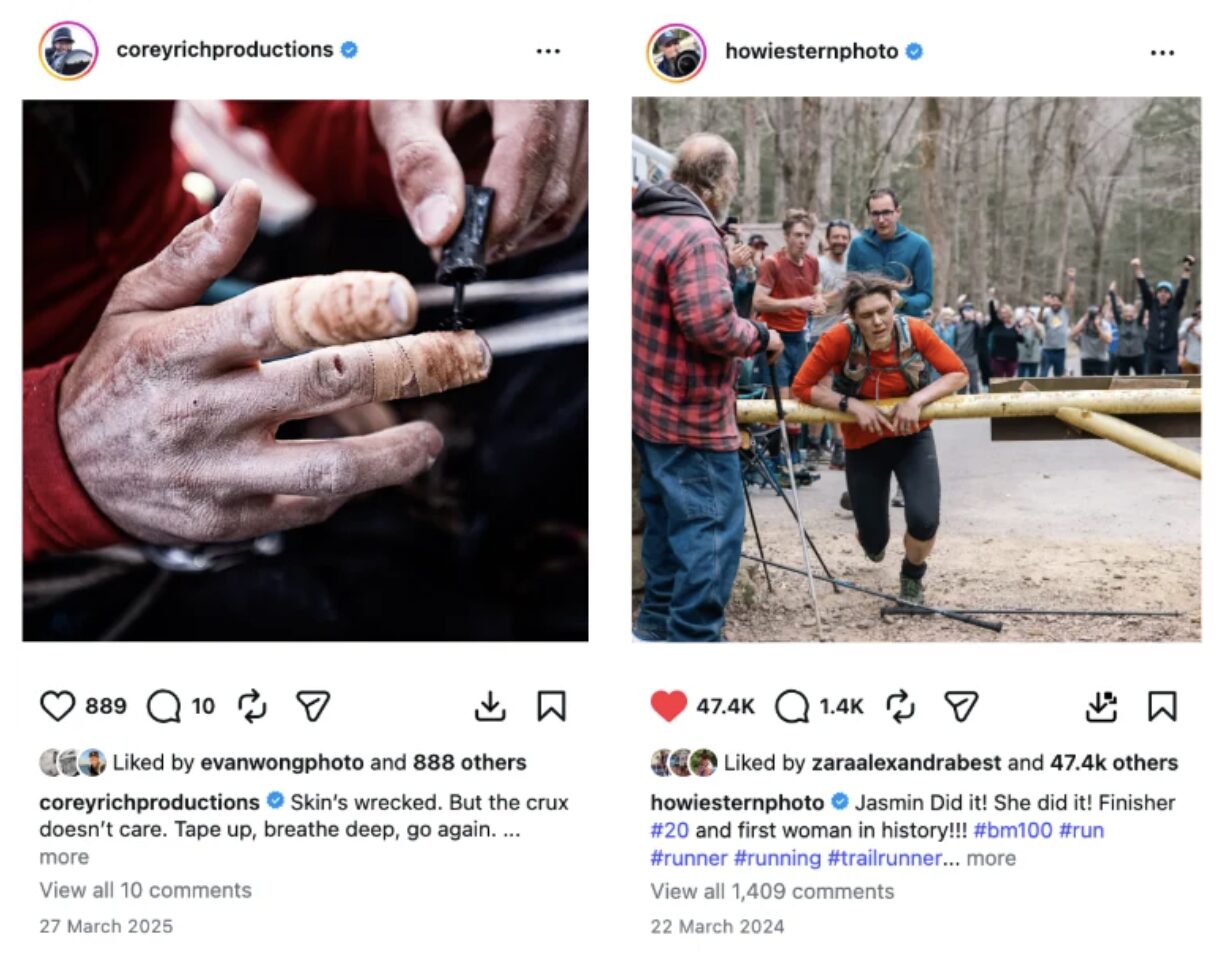
When it comes to athletic endurance, I’m fascinated by what humans are capable of.
Specifically, their ability to push through significant suffering and absolute misery in the pursuit of remarkable physical feats.
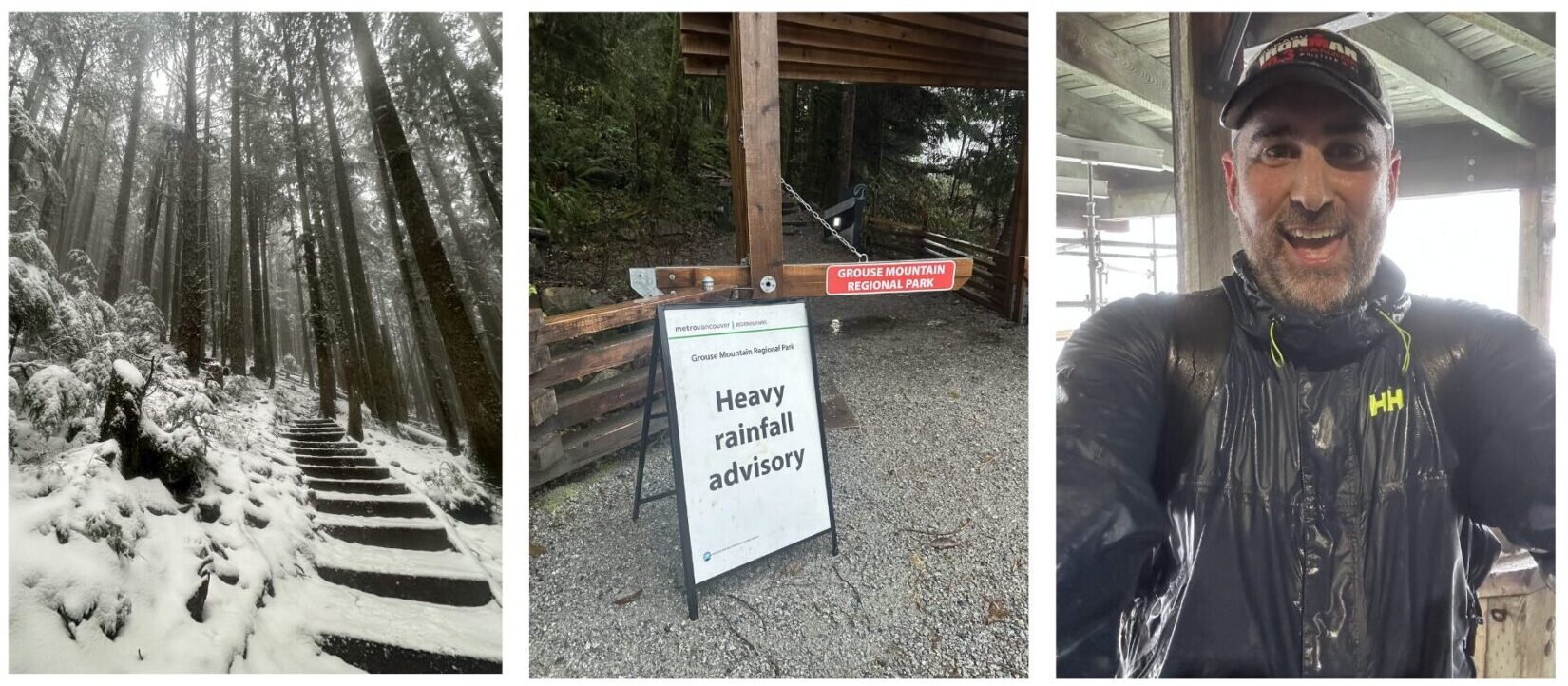
And while perhaps not as extreme as these examples, many of us have experienced what it’s like to push through our own physical comfort levels, whether that’s a running a 10k or a marathon, a sprint or full distance triathlon, or some other random endeavour (I’m signed up to for an “Everesting” mountain race this summer).
The question I keep coming back to is: what part of our soul pushes us to endure such discomfort, and go to such extremes, in the pursuit of these crazy goals?
It’s not as if fame and fortune are the drivers for the athletes in these obscure sporting worlds – the financial gain and notoriety are simply not comparable to the likes of what mainstream sport athletes see. Similarly, in the amateur world, not only will the majority of us will never see a podium or prize money, but we’ll actually spend thousands on race fees, coaches, apparel, nutrition, physio, fitness trackers, footwear, and everything in between.
The answer matters, because it’s the force that dictates how we interact with the world as consumers.
If we market strictly to the brain, we miss the point entirely. Logic alone can’t explain why an amateur athlete will happily sacrifice sleep, spend thousands of dollars, and push through physical agony just to cross an arbitrary finish line. They aren’t buying products; they are funding a belief system.
For CMOs, the lesson is clear: if you want to change consumer behavior, you have to look past the transaction and look at the transformation.
At Connelly Partners, this is our north star. We know that in a world full of noise, you can’t just ask people to take action. We move customers’ feet, by first moving their souls. Because when a brand taps into the deep, irrational emotions that drive human behavior, they don’t just win a customer. They build an obsession.
How Helping a Stranger Moved My Soul
Courtney Marlow, Social Media & Influencer Marketing Supervisor
We’re taught from a young age that helping a stranger is a selfless act meant to benefit the other person. It’s framed as a one-way street of generosity. But after my own experience, I’d argue the opposite: helping a stranger can move your souljust as much as (if not more than) the person you’re helping.
When I was strolling through campus in college, I signed up for the National Marrow Donor Program (NMDP) registry and like most people, I never actually expected to be selected. Statistically, only about 1 in 430 members ever go on to donate, so I forgot about the swab almost as soon as I walked away from the table.
From Swab to Soul-Moving
Years later, I got the call. My first thought was that it was a scam. I was skeptical enough that they actually had to FedEx me a physical letter and call my mom (ha!) before I realized it was the real deal. Then came the disbelief. I was the only perfect match for a stranger fighting Non-Hodgkin’s lymphoma, and suddenly, I was preparing to do a stem cell donation. That tiny statistical chance had become my reality.
The “Giving” Paradox
While it might seem like I was the one “giving” in this situation, I can honestly say that the experience moved my soul in a way I wasn’t prepared for. It’s hard to articulate the weight of being handed the opportunity to give someone else hope. You go into it thinking you’re performing a service, but you come out of it with a shifted perspective on the weight of a single life, regardless of whether they’re a stranger or loved one.
A Two-Way Street
In the crazy, fast-paced world we live in, it’s easy to get caught up in our own bubbles, like our own schedules, goals, and close circles of friends. But this experience is a great reminder that Moving Souls isn’t just a tagline we use at work; it’s a human practice.
I’d do it again in a heartbeat. Looking back, it really shifted my perspective on generosity and reminded me to prioritize infusing it into my daily life more often. You never know when a friendly smile, a donation, or a helping hand could make a huge difference. And let’s face it, there are moments in all of our lives when we’re the “stranger” in need.
And if I’ve successfully moved your soul today, I hope you’ll take a few minutes to sign up here to get on the registry list 🙂
A Month Abroad: What I Learned
Like many others around my age, I did not go abroad in college due to COVID. A part of me always wondered what the experience would have been like as everyone had always said you most likely only get to experience it once in your life, and how special it was for them.
Well somehow I got lucky enough to work at a company that offers an abroad program, so it all worked out!
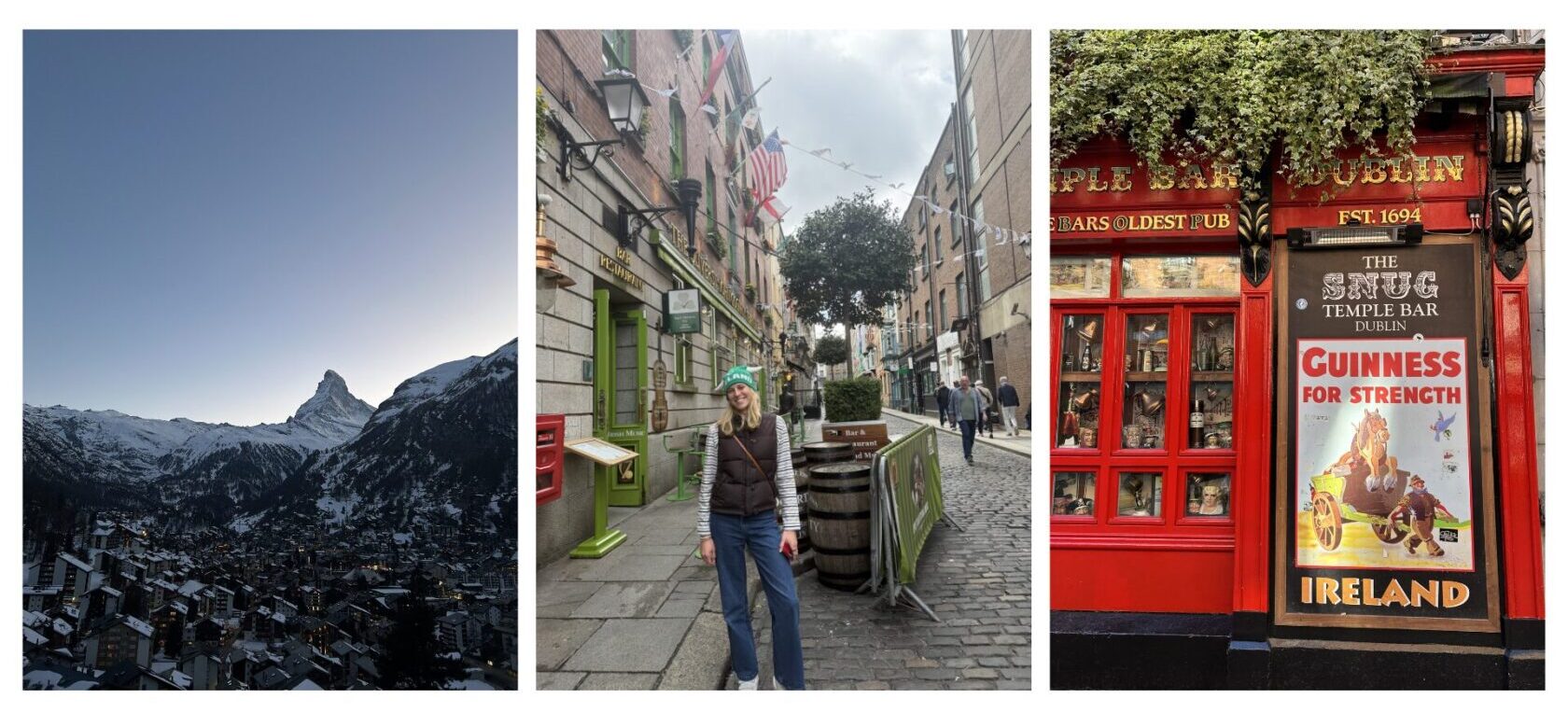
Wanting to maximize this opportunity, I first headed to Zermatt, Switzerland to get in 5 days of skiing in one of the most beautiful places I’d ever seen. The constant fresh air and wide open mountain views of the Matterhorn were the perfect reminder of the importance of slowing down and being fully present in a way that’s hard to find in our fast-paced world.
After taking my checked bag, carry-on, personal item, ski bag, and boot bag on 3 trains back to Zurich during rush hour, I flew to Dublin to get ready for my month working abroad. Despite everyone’s horrified look when I told them I was staying in Temple Bar, it was the perfect place to be fully in the mix for the month.
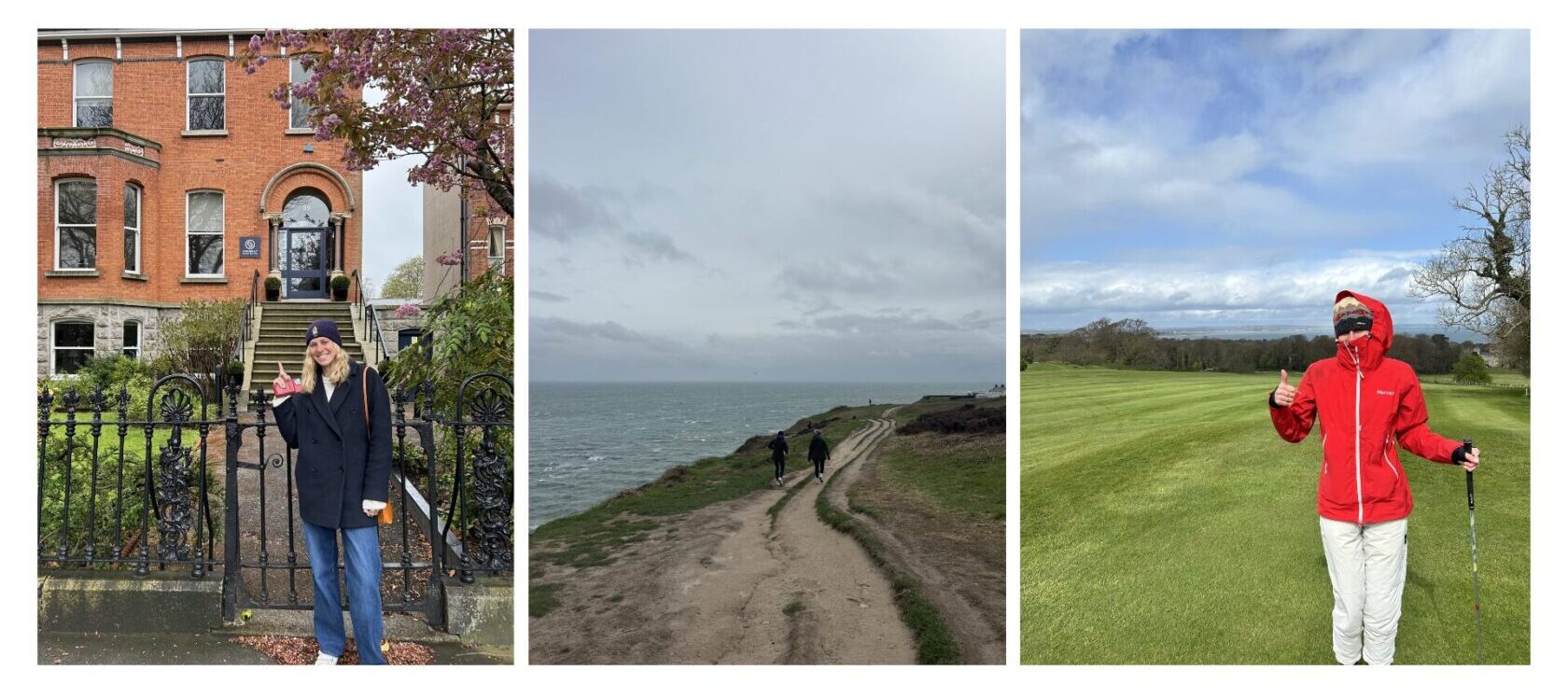
The first thing I learned in Dublin was how genuine and friendly the Irish people are, and how excited they were to share their culture with me (and how excited they were to hear I lived in Southie). I quickly adjusted to my new home for the month and settled into my routine of going to the CP Dublin office, located in a beautiful area of the city. I felt incredibly welcomed by my coworkers, who I had only ever interacted with online. I learned so much from them, from new words to the places I had to visit. I also was pleasantly surprised when they told me they all eat lunch together in the kitchen every day.
Despite the crazy weather, I checked off a bucket list item of golfing in Ireland, embarked on amazing cliff walks, went on the duck boat adjacent – the Viking Splash tour, and of course drank a lot of Guinness. I was also lucky enough to have many of my friends and family come visit which really allowed me to play tour guide and share the experience with them.
I was also able to read a bit of James Joyce’s Ulysses with PJ Murphy, who runs Sweny’s Pharmacy, the famous shop featured in the book. In addition to having read the novel over 80 times, PJ speaks 10 languages, and is a descendant of the famous Oscar Wilde. I somehow ran into him again at a pub later that day and ended up having a drink with him. If that doesn’t prove how welcoming and friendly people in Ireland are!
Living and working abroad gave me a new sense of independence that I had never experienced before. Having never lived on my own, let alone in a completely different country, navigating daily life in an unfamiliar environment pushed me outside of my comfort zone and challenged me to rely on myself in ways I never had before.
This experience was also a great reminder that the paths we think we missed are simply waiting to meet us later, in a way that feels even more aligned. Allowing myself to tailor my time abroad around what mattered most to me helped me build even more authentic, meaningful connections that I’ll continue to carry with me throughout my life.
More Than Just a Commute
Introducing “Transport for Your Spare Time”
The workday is done, the school gates are closed, and the weekend is calling. At Connelly Partners, we’ve always known that public transport is the backbone of the daily grind. But when the National Transport Authority (NTA) challenged us to increase off-peak usage, we saw an opportunity to change the narrative.
Reclaim Evenings and Weekend
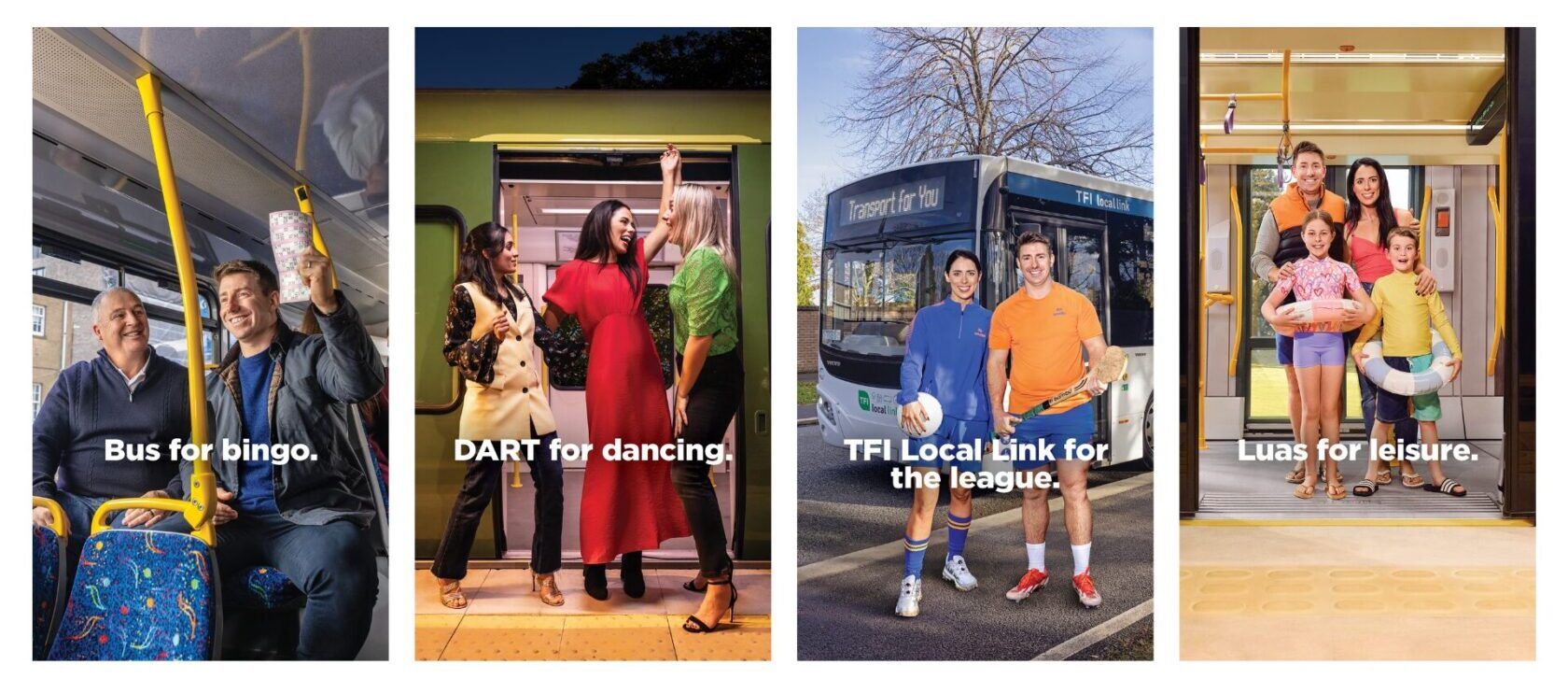
Most people view public transport as “utility” tools, something you have to take to get to work or school. Our goal was to flip that script. We wanted to position Transport for Ireland (TFI) not just as a commuter service, but as an enabler of Irish social life.
The creative centers on the moments we live for: taking the DART to go dancing with friends, the TFILocalLink to GAA training, the Bus to the bingo hall, and the Luas for leisure at the local pool. By highlighting these specific, relatable Irish pastimes, we shifted the focus from the destination to the experience.
We leaned into high-energy visuals and a bright, summer-ready palette. We didn’t want static scenes; we wanted movement. To capture that energy, we worked with the dynamic crew at Bad Coyote to film all eight campaign scenes in a single, high-octane day.
The campaign is currently live across Ireland, spanning a heavy digital presence on YouTube and social channels, supported by OOH (Out of Home) rollout. As we head into summer, we’re proud to help TFI show Ireland that the network is there for more than just the commute; it’s there for your spare time.
When a Soul Is Moved, All Is Forgiven
Will Burns, Chief Growth Officer
In today’s complex, overstimulated, multimedia world, it’s not enough to be “convincing” and expect your audience to act. We believe the only way to move people’s feet—the tangible actions like visits, signups, and loyalty—is to move their souls first. Everything we do at Connelly Partners is designed accordingly. What you may not know is that there is a seriously powerful fringe benefit for a brand when it successfully moves souls. That is, immunization from harm.
Let me give you an exaggerated example. When I was 3 years old I was moved by the Beatles song, “Hey Jude.” Believe it or not, I still remember the day my older brothers summoned me and put the headphones on me and said, “Listen to this.” I did and I was transformed.
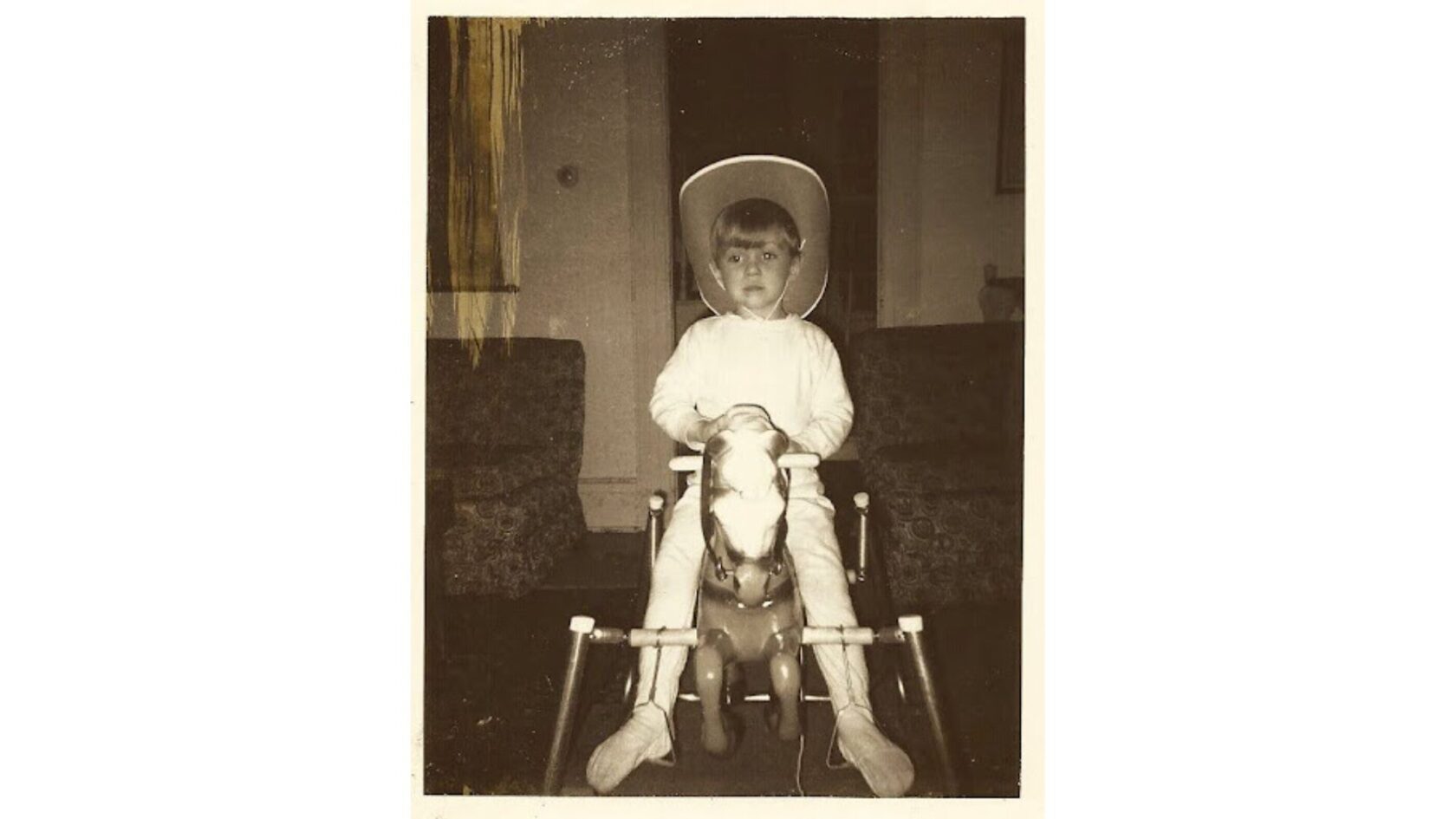
I would sing it while rocking on my rocking horse with my cowboy hat on. Seriously, there’s a picture. I became obsessed with the song, then obsessed with the Beatles in general. It was a profound “branding” experience for me. The Beatles moved my soul and that moved my feet, listening to more records, identifying new favorites, buying posters, you name it.
But you know what else it did? It immunized my favorite Beatle, Paul McCartney, from his many lame albums post-Beatles. I was able to suffer through the albums “Wildlife,” “Give My Regards To Broadstreet,” and “Pipes Of Peace,” because my soul was already moved to such a degree. This is not to say Paul didn’t have any good albums, he did. “Band On The Run,” “Back To The Egg,” and “Ram” were classics. But my point is, I was able to endure the flops because once a soul is moved, there’s no turning back.
That’s a personal story, but there are plenty in the marketing space. Remember that wonderful “Think Different” campaign from Apple way back when? Here’s the genius “Here’s To The Crazy Ones” TV spot that Chiat Day created that highlighted all the “crazy ones” from humanity’s past. Apple planting a flag firmly into rebel territory and this beautiful spot truly moved souls. But what’s ironic about this spot is the timing. It came out just after Steve Jobs returned to save the company he started and you know what? The Apple product assortment had become a disaster while he was out. And Jobs, in his infinite wisdom, must have known that in order to retain any of the remaining Apple fans, he’d need to avoid product and instead move souls.
And boy did he.
That one spot, I’d argue, immunized Apple from certain negative perceptions about the products to extremely positive perceptions about its brand. Forgiveness was the result, and in abundance.
More recently, look at Patagonia. I’d wager they could come out with a new line of flawed jackets that fall apart after one wear and it would only start a trend for disposable jackets. Patagonia has moved souls to such a degree with their commitment to environmental well-being that it would take a lot of flops to tarnish the brand in any significant way.
So we as marketers could continue to try convincing the world that this product or this feature is better than that product or that feature. Or we can set our sites higher and try to move souls. That’s our mission.
Because, heck, moving souls not only immunizes brands. You might say it takes a sad song and makes it better.
The Gift of Time: Outsourcing Influencer Management is Essential for Today’s Brands
Neal Malone, Director of Social Media, Influencer Marketing, and PR
For most people, hiring a house cleaner doesn’t feel right. Why would you pay someone a few hundred bucks every few weeks to complete the household tasks that you can do yourself? It’s an age-old question.
But then, life happens. The job becomes more demanding, the weekends get swallowed up by events and activities, and that full basket of laundry has been sitting at the bottom of the stairs for a week.
Suddenly, outsourcing these tasks doesn’t seem so crazy anymore. People begin to realize that if they want to focus on their true priorities, hiring a house cleaner is an easy remedy. After all, it’s really time that they’re after—and time has significant value.
You know what influencer marketing is? It’s a big, messy house that takes hours and hours to clean. And sure, brands can do it themselves without help from an outside agency—but at what cost? To truly maximize your investment in influencer partnerships, it takes time. So much time. I know this because my job is to absorb all that labor-intensive influencer work from clients so that they don’t have to remain in the weeds.
Hiring an agency like Connelly Partners to build and manage your influencer program is giving yourself the gift of time—and in turn, the ability to focus on other business priorities. Just like a house cleaner, our influencer expertise has a price tag, but brands are actively looking for ways to get internal hours back. And quite frankly, they’ve started to realize that the house sparkles that much more when you leave it to the professionals.
Ok, so you’ve decided to hire an agency to run your brand’s influencer program. Now what?
There are tons of influencer SaaS platforms and influencer-only agencies out there—and they’ll all sell you on access to a database of millions of influencers and a managed service offering. This type of big-box influencer assistance can totally work for large, established brands that are activating partners at massive scale. But for most other brands, a more hands-on approach is required. Budgets aren’t endless, campaigns are more niche, and brand awareness hasn’t even come close to reaching its peak, making it absolutely critical to find the right influencer partners.
That right there, folks, is what makes Connelly Partners’ dedicated influencer practice different.
Everything we do is customized to the client’s needs and goals, every influencer partner search is unique and based entirely on the campaign brief, and the team takes on every step of the process—from writing the brief and contracting influencers to shaping the content deliverables and measuring performance. Plus, as an integrated agency, our influencer programs are seamlessly weaved into paid social campaigns and measurement strategies, ensuring that the content is reaching target audiences and tracking towards all of the brand’s core KPIs.
That house cleaner is sounding a lot better now, isn’t it? Just do us a favor, though—when you go to make your agency hire, do your research. Don’t just look for the biggest name. Find someone who is actually going to dust the top half of the blinds and pull out the chairs when they vacuum. That’s what we do.
The New Expressway Fleet
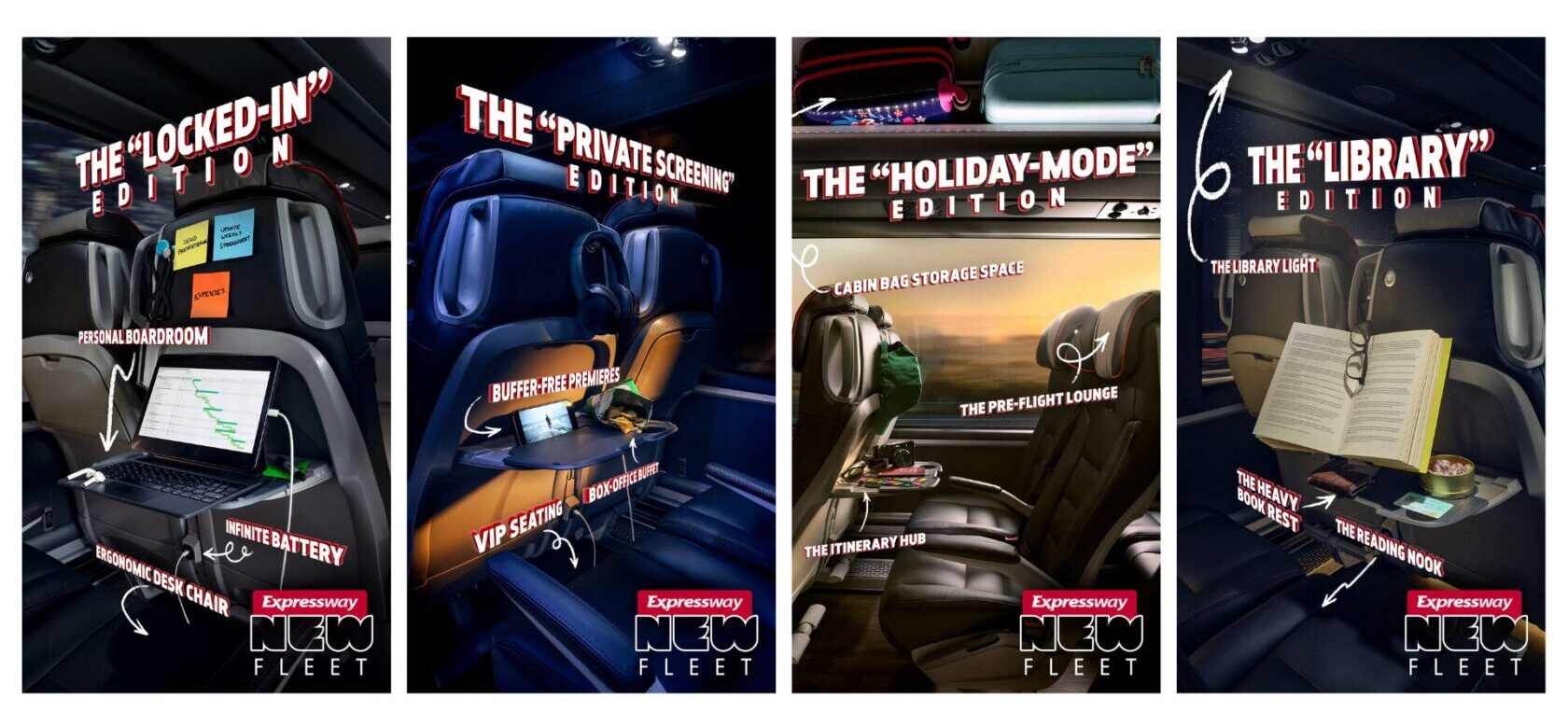
When Expressway asked us to announce their new fleet, the objective was clear: move beyond the traditional “new vehicle” specs and focus on the human experience. While the technical upgrades, like 5G connectivity, integrated power, and ergonomic design are impressive, Expressway’s true value lies in what they enable the passenger to achieve.
Our creative strategy centered on the idea that travel time shouldn’t be “dead time.” Whether you are a professional, a student, or a holidaymaker, the new fleet provides a bespoke environment tailored to your needs.
Rather than a standard gallery of bus photos, we developed the “Editions” concept. This series of visuals transforms the coach interior into specialized zones: a personal boardroom, a private cinema, a quiet library, and a pre-flight lounge. By highlighting features like “Infinite Battery” and “Buffer-Free Premieres,” we shifted the narrative from the mechanics of the journey to the quality of the time spent on board.
The visual language of the campaign uses cinematic lighting and bold, 3D typography to signal a new era for the brand. We wanted the assets to feel premium and modern, reflecting the significant investment Expressway has made in passenger comfort.
With a focus on total personalisation, we’ve positioned Expressway as a lifestyle enabler rather than just a transport provider. We are proud to have partnered with them on this launch, helping to redefine what it means to travel by coach.
Gen Z in Their Own Words: Insights from Our Latest Women’s Panel
Maya Menon Freeman, Brand Strategist
For Connelly Partner’s most recent Women’s Networking Event, I moderated an incredibly thoughtful, candid panel of young professionals.
The intention was simple: create space for unfiltered perspectives that challenge generational assumptions. We got a look inside what moves Gen Z’s souls, and ultimately moves their feet to purchase. Here are the takeaways that have stayed with me:
Gen Z’s Favorite Brands Go Beyond Affinity
When panelists shared their favorite brands, the common thread wasn’t aesthetics or product quality, it was deep investment in their customer base. Gap felt like it was “talking with Gen Z, not talking at us,” and Guinness stood out for consistently giving back to its community. Topicals earned praise for formulating skincare “with melanated skin in mind first” and constantly improving from consumer feedback.
Gen Z doesn’t just want to buy from brands, they want to feel valued by them. This requires intentional effort to understand consumer mindsets, because when brands move people on a deeply human level, action naturally follows.
Authenticity Isn’t Dead, it’s the Litmus Test
This sparked one of the most nuanced debates of the evening: On one hand, there’s fatigue around recycled trends that has made authenticity feel hollow. But the counterpoint was sharper: Authenticity isn’t disappearing, it’s getting harder to fake. “Trying to be authentic is literally the opposite of authenticity,” one panelist noted, emphasizing how quickly Gen Z can detect when something feels manufactured.
The baseline isn’t performative relatability. It’s consistency, originality, and self-awareness.
Brands Need to Talk the Talk andWalk the Walk
Real trust comes from follow-through, and a brand’s refusal to engage with big issues means “you lose that human connection, and you’re not actually caring about the people that you’re making products for.” Whether it’s Topicals reformulating a serum based on feedback or brands protecting their workers, clear action supported by storytelling is what differentiates.
It’s important to note, subtlety can outperform spectacle. Brands like Patagonia, who embed their values into operations, often feel more credible than those loudly shouting them.
Fulfillment Is the Ultimate Goal
For Gen Z, fulfillment isn’t a luxury, it’s a requirement. This shows up both in how they consume and how they work. It lives “in the small activities…your morning coffee…your evening run.” One panelist shared that they left a stable corporate role because it conflicted with personal values, choosing instead to “actually connect with humans again and do something I love.”
While this is often seen as disengagement, in truth it is a practice in intentionality. In a world of constant information and instability, fulfillment becomes a form of control and acts as a north star.
Trust Gen Z to Lead the Conversation
If you want to reach Gen Z, involve them meaningfully. “Don’t just have us present, have us involved entirely from start to finish.” Representation without influence is easy to spot, and campaigns can easily fail when Gen Z doesn’t have a seat at the table.
Young people are increasingly undervalued in AI-driven environments, but to create work that resonates, you have to trust their voices. “Pick our brains…that’s why we’re there. If you want our fresh perspectives, just ask.”
Across different perspectives, it’s clear: Gen Z isn’t looking to be convinced, they want to be seen. They’re active participants who are quick to question, quicker to disengage, and determined to shape what comes next. By understanding what moves their souls, whether it’s authenticity, fulfillment, or trust, we can define the catalysts that truly move Gen Z’s feet.
Check out a clip from the event below!
Welcome to the Era of the Unpolished Brand
Jane Amendolara, Sr. Public Relations, Social Media, & Influencer Marketing Manager
There’s no secret sauce to brand success, but there was a time when polished content was the gold standard. Perfectly staged shots, 100% branded messaging, and scripted lines were how brands proved they were “serious.” Scroll through a Gen Z social feed today, though, and that level of polish often reads as stiff, distant, or … try-hard.
It’s not a sudden change. Social-first platforms have steadily nudged audience expectations toward a more unpolished, authentic style. While polish still has a time and place across the broader marketing mix, what was quietly emerging is now unmistakable in 2026: on social, relatability beats perfection every time.
Welcome to the era of the unpolished brand, where scrappy is the new serious.
Gen Z grew up online. They know what “real” content looks like because they make it themselves in minutes. They can spot a scripted or overproduced video in half a second. It’s not about production quality; it’s about authenticity. Overly polished content can make a brand feel like it’s managing perception rather than participating in culture. And participation? That’s what Gen Z actually values.
TikTok didn’t just change the look of content. Over the last several years, it’s changed the feel of it. Brands aren’t just competing with other brands anymore; they’re competing with a five-second meme, a chaotic storytime, or a random relatable comment that somehow lands perfectly. The algorithm rewards resonance, relatability, and timing. Not polish.
All of this means it’s time to rethink the brand book. Social-first brands need a new layer of guardrails that let teams move fast, lean into humor, respond in real time, and flex with trends. It’s not chaos. It’s strategic looseness, where the post is only the start. That’s because real engagement happens when a brand participates by joking along, acknowledging feedback, or even using the comment section as creative inspiration for future content. Huge brands like Dunkin’, for example, do this all the time, by sharing memes and posts that look like a five-year-old could have created them on an iPad. That’s how brands become relatable; they lean into the joke to build a real connection.
Scrappy content doesn’t mean you’re being lazy. Done right, it signals confidence: “We get the platform. We trust our team. We’re here to participate, take risks, and show up in unexpected ways.” When a brand intentionally lets go of perfection, the payoff isn’t just likes or shares. It’s cultural relevance.
Join our mailing list
Manage Consent
To provide the best experiences, we use technologies like cookies to store and/or access device information. Consenting to these technologies will allow us to process data such as browsing behavior or unique IDs on this site. Not consenting, or withdrawing consent, may adversely affect certain features and functions.
Functional
Always active
The technical storage or access is strictly necessary for the legitimate purpose of enabling the use of a specific service explicitly requested by the subscriber or user, or for the sole purpose of carrying out the transmission of a communication over an electronic communications network.
Preferences
The technical storage or access is necessary for the legitimate purpose of storing preferences that are not requested by the subscriber or user.
Statistics
The technical storage or access that is used exclusively for statistical purposes.The technical storage or access that is used exclusively for anonymous statistical purposes. Without a subpoena, voluntary compliance on the part of your Internet Service Provider, or additional records from a third party, information stored or retrieved for this purpose alone cannot usually be used to identify you.
Marketing
The technical storage or access is required to create user profiles to send advertising, or to track the user on a website or across several websites for similar marketing purposes.
To provide the best experiences, we use technologies like cookies to store and/or access device information. Consenting to these technologies will allow us to process data such as browsing behavior or unique IDs on this site. Not consenting or withdrawing consent, may adversely affect certain features and functions.
Functional
Always active
The technical storage or access is strictly necessary for the legitimate purpose of enabling the use of a specific service explicitly requested by the subscriber or user, or for the sole purpose of carrying out the transmission of a communication over an electronic communications network.
Preferences
The technical storage or access is necessary for the legitimate purpose of storing preferences that are not requested by the subscriber or user.
Statistics
The technical storage or access that is used exclusively for statistical purposes.The technical storage or access that is used exclusively for anonymous statistical purposes. Without a subpoena, voluntary compliance on the part of your Internet Service Provider, or additional records from a third party, information stored or retrieved for this purpose alone cannot usually be used to identify you.
Marketing
The technical storage or access is required to create user profiles to send advertising, or to track the user on a website or across several websites for similar marketing purposes.